Industrial anti-fatigue mats are widely used in factories, assembly lines, packing stations, workshops and other workplaces where employees spend extended periods standing.
While these mats are designed to provide underfoot comfort and withstand daily industrial use, proper cleaning and maintenance are essential for maintaining their condition and functionality.
Dust, production debris, moisture and oil residue can gradually accumulate on mat surfaces. Without regular maintenance, these contaminants may affect surface traction, cleanliness and overall mat performance.
However, not all anti-fatigue mats should be cleaned in the same way. PVC, rubber and NBR mats have different material properties, and their maintenance requirements depend on the working environment.
This guide explains how to clean industrial anti-fatigue mats, maintain different materials and recognize when a mat may need replacement.
Industrial workplaces expose floor mats to different types of contamination.
For example:
Assembly lines may accumulate dust, packaging debris and small particles.
Packing stations experience frequent foot traffic and surface wear.
Workshops may be exposed to oils, lubricants and production residue.
Commercial kitchens and food-processing areas often require frequent removal of water, grease and other contaminants.
Regular cleaning helps prevent dirt and residue from accumulating on the mat surface.
It also provides an opportunity to inspect the mat for wear, damage or movement that could affect normal workplace use.
For industrial facilities, an effective maintenance program should combine routine cleaning, periodic inspection and material-appropriate cleaning methods.
For most dry industrial workstations, daily maintenance can begin with a few simple steps.
Start by removing loose dirt, packaging scraps and other particles.
Depending on the mat surface, suitable methods may include:
Vacuum cleaning
Sweeping with a soft-bristle broom
Gentle brushing of textured surfaces
Pay particular attention to grooves and surface patterns where dirt may accumulate.
For compatible mats, use a soft cloth or mop with a manufacturer-approved mild cleaning solution.
Avoid excessive detergent, as residue left on the surface may affect traction or attract additional dirt.
Cleaning agents should always be selected according to the mat material and the type of contamination.
Check for trapped debris, moisture, damaged edges or unexpected movement.
Where the mat can be safely lifted, inspect and clean the underlying floor according to the facility's maintenance procedures.
After wet cleaning, remove residual moisture and cleaning solution.
Make sure both the mat and underlying floor are sufficiently dry before returning the area to normal use.
This helps prevent moisture from remaining trapped beneath the mat.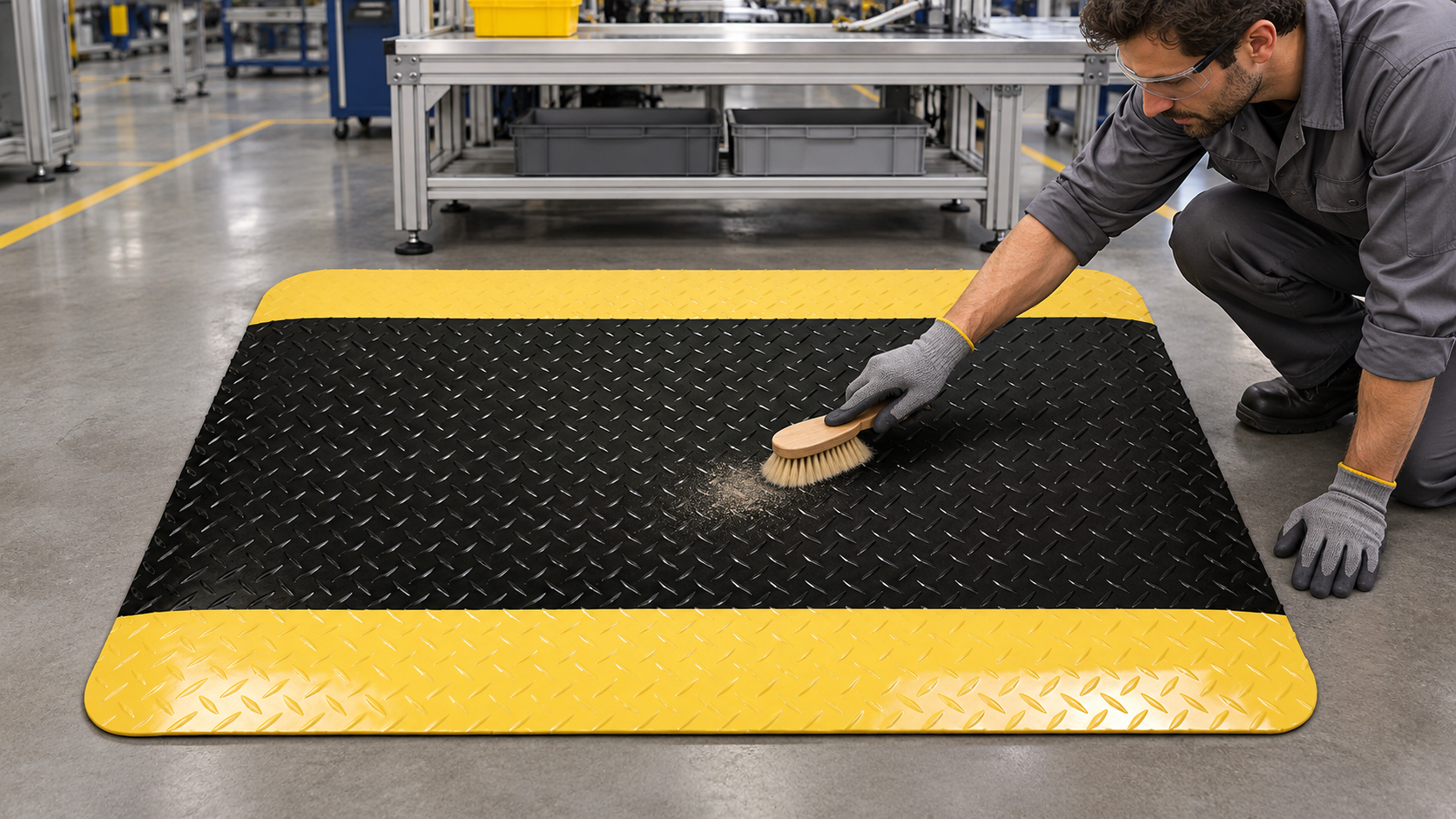
PVC anti-fatigue mats are commonly used in industrial workstations where employees stand for extended periods.
A typical example is the Wondra™ PVC Wear-Resistant Anti-Fatigue Mat.
Wondra™ features a wear-resistant PVC surface combined with a high-density cushioned PVC layer. Its diamond-pattern surface provides traction, while the cushioned construction offers a more comfortable standing surface than hard industrial flooring.
For routine maintenance, vacuum the mat daily to remove dust and loose debris.
Depending on workplace conditions, the surface may be rinsed with water and cleaned periodically using a pH-neutral detergent and a suitable soft brush.
A practical cleaning procedure includes:
Remove loose dirt using a vacuum cleaner or soft brush.
Clean visible stains with a compatible mild cleaning solution.
Gently brush textured areas to remove accumulated particles.
Remove remaining detergent and cleaning residue.
Allow the mat and underlying floor to dry before returning the area to service.
Inspect the edges and cushioning structure for wear or deformation.
For areas with heavier contamination, cleaning frequency may need to increase according to actual usage conditions.
Avoid harsh solvents, aggressive abrasive tools and unapproved high-temperature cleaning methods that could damage the PVC surface or cushioned structure.
For dry assembly lines, packing stations and inspection areas, consistent routine maintenance is generally more practical than waiting until heavy contamination develops.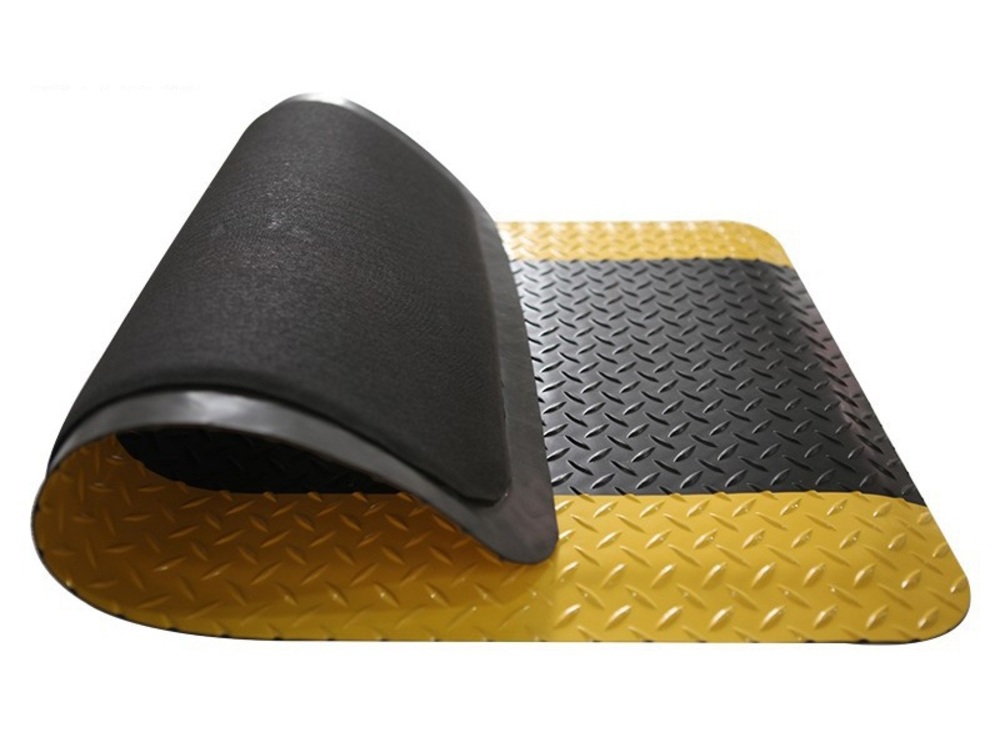
Rubber and NBR anti-fatigue mats are frequently used in workplaces exposed to moisture, grease or industrial contaminants.
These environments require additional attention because liquids and debris may accumulate around or beneath the mat.
The Andiva™ Anti-Fatigue Mat range includes rubber and NBR options designed for different workplace conditions.
Its open drainage structure allows liquids and debris to pass through, making regular cleaning of drainage openings and the underlying floor especially important.
A practical cleaning procedure includes:
Remove loose debris from the surface and drainage openings.
Where safe and practical, lift or remove the mat to access the floor beneath.
Apply a cleaning solution approved for the specific rubber or NBR material.
Gently scrub contaminated areas with a suitable brush.
Rinse when permitted by the product's cleaning instructions.
Allow the mat and underlying floor to dry before reinstalling.
For Andiva™, PAALER recommends cleaning with a pH-neutral cleaner and allowing the mat to dry away from direct sunlight.
In workshops, maintenance areas and commercial kitchens, oily contamination should be addressed promptly.
Even when a mat is designed with oil-resistant materials, accumulated grease may still affect surface cleanliness and traction.
Facilities should use cleaning agents compatible with both the mat material and the type of oil or grease involved.
It is also important to distinguish between standard rubber and NBR options, as their resistance to oils and chemicals may differ.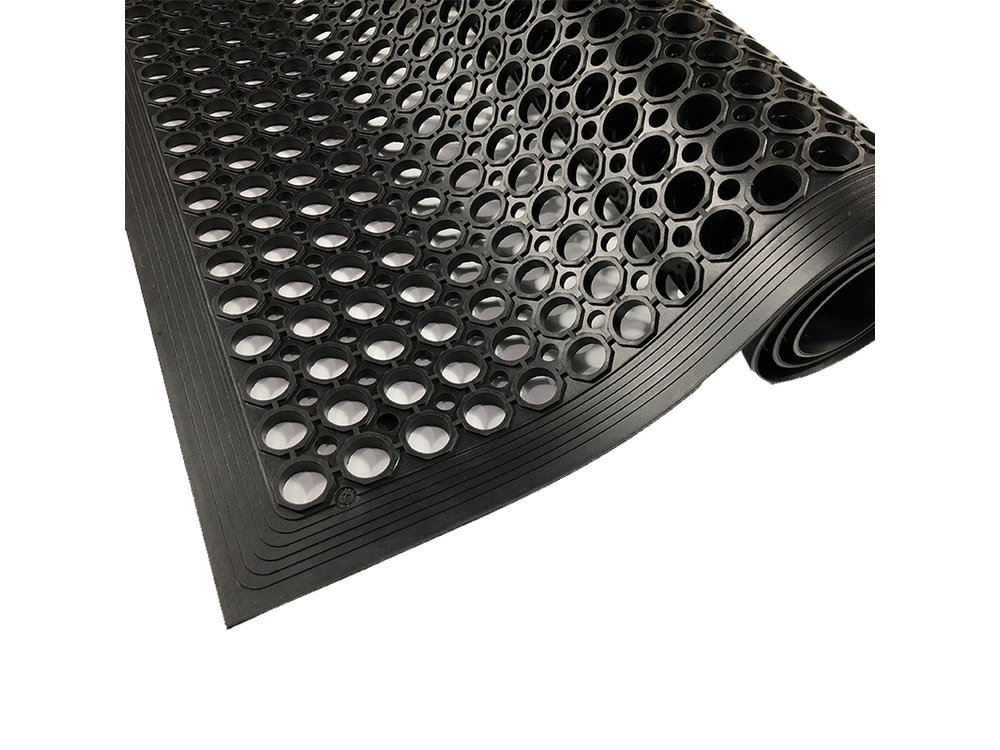
Cleaning requirements should reflect actual workplace conditions rather than follow one fixed schedule for every facility.
| Work Area | Common Contamination | Maintenance Focus |
|---|---|---|
| Assembly stations | Dust and light debris | Routine vacuuming and surface cleaning |
| Packing stations | Packaging scraps and dust | Debris removal and edge inspection |
| Workshops | Oil, lubricants and particles | Compatible cleaners and contamination control |
| Commercial kitchens | Water, grease and food residue | Frequent cleaning and drainage inspection |
| Wet industrial areas | Water and production residue | Drainage cleaning and drying beneath mats |
For dry industrial workstations, a PVC anti-fatigue mat such as Wondra™ may be appropriate.
For wet or oily environments, rubber or NBR options such as Andiva™ may provide a more suitable structure and material selection.
The appropriate cleaning method should always be determined by both the material and the actual working conditions.
Even durable industrial mats can be affected by inappropriate maintenance.
Strong solvents and aggressive cleaning agents may damage certain mat materials.
Always follow the manufacturer's instructions and confirm chemical compatibility before introducing a new cleaning product.
Moisture trapped between a mat and the floor may create hygiene and maintenance concerns.
After wet cleaning, inspect the underlying surface and allow it to dry before reinstalling the mat.
For open-structure mats, dirt and grease can accumulate inside drainage channels.
These areas should receive regular attention, especially in wet or oily workplaces.
Avoid unapproved high-temperature washing or drying methods.
Temperature limits depend on the material and construction of the mat.
A mat may appear clean while showing signs of compression, edge damage or structural deterioration.
Regular inspections should therefore be included in the maintenance routine.
There is no universal replacement interval for every industrial anti-fatigue mat.
Service life depends on several factors, including:
Material composition
Frequency and intensity of use
Foot traffic and mechanical loading
Exposure to oils, moisture and chemicals
Cleaning methods
Workplace conditions
Facilities should regularly inspect mats for signs of deterioration.
Common warning signs include:
Cracks, tears or damaged surfaces
Permanently compressed cushioning
Curled or deteriorated edges
Unstable positioning during normal use
Damaged connections or interlocking sections
Contamination that cannot be removed with approved cleaning methods
If a mat no longer provides stable support or presents a potential slip or trip hazard, it should be removed from service and assessed for replacement.
A documented inspection routine can help facility managers make consistent maintenance decisions.
Maintenance requirements should be considered during product selection, not only after installation.
Before purchasing industrial anti-fatigue mats, buyers should evaluate several practical factors.
Working Environment
Is the mat intended for a dry workstation, wet area or oil-exposed industrial environment?
Material Selection
Would PVC, rubber or NBR be more appropriate for the working conditions?
Surface Design
Can dust, dirt and production debris be removed efficiently?
Drainage Requirements
Does the application require an open structure to allow liquids to pass through?
Installation and Accessibility
Can the mat be safely removed for cleaning and inspection when necessary?
Expected Usage
How much foot traffic, mechanical wear and contamination will the mat experience?
For dry workstations, the Wondra™ PVC Wear-Resistant Anti-Fatigue Mat offers a cushioned standing surface with a wear-resistant PVC top layer.
For wet or oily workplaces, the Andiva™ Anti-Fatigue Mat provides rubber and NBR options with an open drainage structure.
Buyers can also explore PAALER's Anti-Fatigue Matting collection to compare available solutions for different workplace environments.
Cleaning frequency depends on the working environment and contamination level. Mats in dry assembly areas may require routine dust removal, while mats exposed to water, grease or heavy debris may need more frequent cleaning.
Some PVC anti-fatigue mats, including Wondra™, may be rinsed with water according to their product cleaning instructions. Excess moisture should be removed, and the mat and underlying floor should be allowed to dry before reuse.
A manufacturer-approved mild or pH-neutral cleaner is generally a suitable starting point. The correct cleaning agent should be confirmed for the specific rubber or NBR formulation and workplace contaminants.
Not all anti-fatigue mats are suitable for pressure washing. Excessive water pressure may damage certain surfaces, cushioning layers or connections. Follow the specific product instructions before using high-pressure equipment.
Regular cleaning, appropriate chemical selection, proper drying and periodic inspections can help maintain mat condition. Replacement decisions should be based on actual wear, damage and workplace safety requirements.
Proper cleaning and maintenance are important parts of managing industrial anti-fatigue mats.
The most suitable cleaning method depends on the mat's material, surface structure and working environment.
For dry workstations, regular debris removal and appropriate surface cleaning may be sufficient. In wet or oily areas, additional attention should be given to drainage openings, cleaning-agent compatibility and the underlying floor.
By combining routine cleaning with periodic inspections, facilities can help maintain mat condition and identify potential problems before they affect daily operations.
Looking for industrial anti-fatigue mats for your facility or distribution business?
PAALER Mat provides PVC, rubber and NBR anti-fatigue matting solutions for different commercial and industrial applications.
Contact PAALER Mat to discuss your working environment, product requirements and suitable matting solutions.

